When I went to paradise to slow down and ended up doing a digital transformation
After 15 years in Quality Management, I left for Southeast Asia with no plan except to stop.
I spent 9 months in Thailand doing something I had never really done before: nothing in particular. For the first time in my adult working life, I was genuinely unproductive. I discovered, slowly, reluctantly, and then with some relief, that there was something to be said for simply being. It was an education I had not expected to need.
Then I took a job managing a small eco resort on one of the most remote islands in the Philippines. The resort had extraordinary TripAdvisor reviews and a loyal following as a honeymoon destination: many guests stayed only a couple of nights, just long enough to mark an occasion, before moving on to another island.
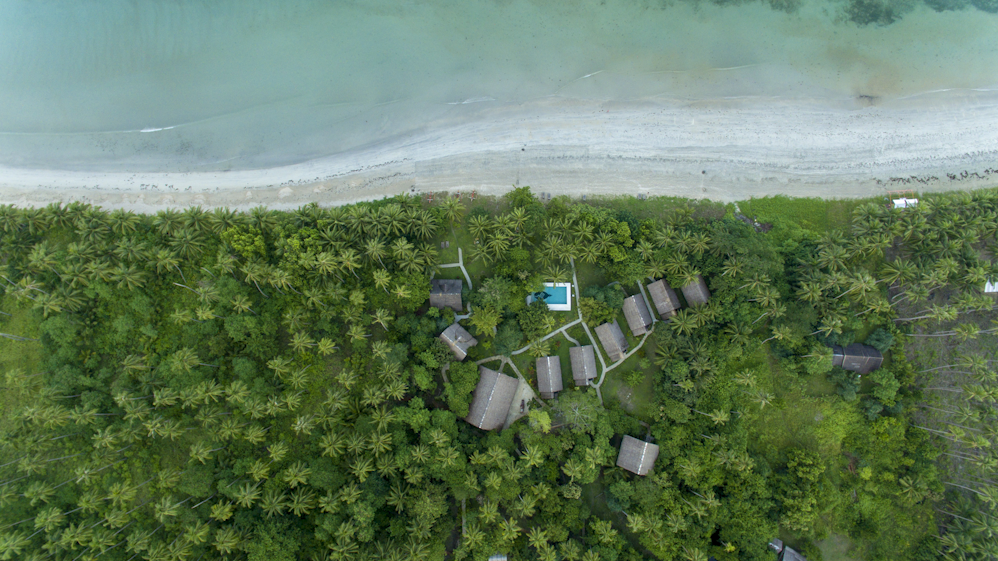
An hour drive from the closest town, and with 8 rooms, 2 boats, a spa, a kite boarding centre, a scuba dive centre, a restaurant and 45 members of staff, the challenges were what I classify as “mega-adventure”. I was general manager, yoga teacher, and scuba dive instructor.
I was there for about 2 years. By the time I left, I had implemented a property management system, a POS, a card payment system, hired an accountant, even trained the local staff in better massage techniques (not me personally, but professional trainers). Finally, I had a few hours to myself each afternoon.
This is that story.
The situation
The resort was small in footprint: 8 rooms, remote location, reachable only by a long bus journey from the capital into the nearest city or expensive direct flight to a private airport, and then a 1-hour drive to the resort; occasionally by boat.
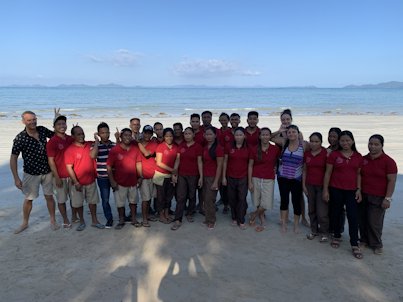
A small footprint did not mean simple operation. The staff headcount was 45 distributed across housekeeping, laundry, restaurant, spa, kite and scuba centres, boat captains, drivers, maintenance. There was genuine complexity here, compressed into a space where everyone was from the local community and part of an extended family somehow. Decisions happened over a conversation rather than a system.
Bookings came in through the resort’s own website, which had the distinguished look of something from the 90s, through Booking.com, and through Agoda. Payments were mostly done through a US PayPal account, a workaround that was legally ambiguous.
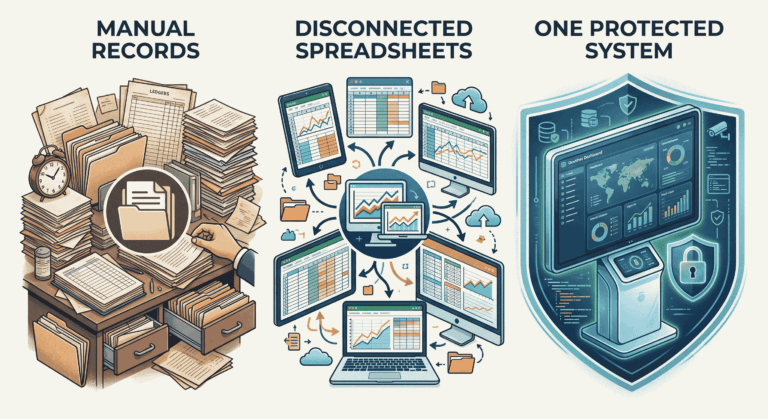
It was Excel galore, several spreadsheets managed room allocation, guest bills, activities, accounts as well as salaries. The infrastructure holding all of this together was three laptops and a Google Drive account, most of the communication done through a Gmail account.
The problem underneath the problem
On any given morning, usually after teaching a 7am yoga class, the first task was to check any new booking or emails that had come through overnight. Confirm room allocations worked and if there were any news on arrivals. With guests booking from different time zones across the website and the OTA platforms, a room couldn’t technically be double-booked, but the lack of coordination between channels meant guests, sometimes, had to be moved mid-stay. The greater risk, though, was not in the digital records, the digital footprint was actually relatively simple. It was in the paperwork.
The data security situation was the sharper concern. Guests’ credit card details were held on paper during their stay and sometimes repurposed as scrap. This was not unusual in the region, even embassies routinely reuse copies of passports as scrap paper for unrelated visitors. GDPR who?
Payroll was its own adventure. The Philippine peso’s highest denomination note is 1,000 pesos, worth very little in cash terms. Paying 45 staff required counting an extraordinary volume of notes. Payday meant either booking a dedicated visit to the bank well in advance or combining it with a supply run to the capital and then travelling by bus with a bag full of cash. I have never counted so much money in my life. I had to get a bigger wallet as card payments were not popular on the island.
There had been an attempt to implement Sage as an accounting package. It worked, technically, but it was far too complex for what the operation actually needed, and it integrated with nothing else. Keeping it current required daily manual entry, and the effort rarely felt worth it until the end-of-month reconciliation came due.
What connected all of these problems was not a missing system so much as a missing structure. The information existed. The risk was in how it was held: on paper, in cash, in files that didn’t relate to each other; and what happened when those pieces needed to come together.
What we did
The first decision was: don’t overbuild. The organisation was small, non-technical, and resource-constrained. What it needed was not an enterprise system. It needed something that fit the actual humans who would use it.
Resort Manager: a property management system built by an independent developer based in Bali turned out to be the right fit. It was affordable, designed specifically for small hospitality operations, and included a point-of-sale module that meant the restaurant and activities were managed in the same system as the rooms. A guest’s running tab during their stay with meals, a scuba dive, a massage, a kite lesson, accumulated against their folio in real time. Checkout meant a quick review and a print. That was it.
We moved room allocation, guest management, activities, and restaurant charges into the system. When a booking arrived — via the website, Booking.com, or Agoda — it went into one place. Room availability was visible in one place. We also moved from Google Drive to OneDrive and retired the Gmail account and started using email addresses related to the domain.
On payments, we got card machines. Cash remained the reality for many transactions on the island, but removing the dependence on a US PayPal account and paper credit card copies was both a practical improvement and a meaningful reduction in risk.
We hired an accountant to take on monthly reconciliation, tax returns, and financial reporting. Sage was retired. The accountant worked from actual records.
What changed
The checkout process went from a reconstruction exercise to a review. The morning allocation check became a formality rather than a salvage operation, which could be partly delegated to my wonderful assistant. Guests rarely needed to be moved mid-stay.
For me personally: I had arrived expecting to slow down and found myself unable to stop. I was teaching yoga at 7am, checking emails, managing staff, coordinating bookings, handling the cash, covering activities. All of it without anything to hold the picture together except my own presence. Once the system did that, I didn’t have to. I could disappear for a few hours in the afternoon. That sounds modest. At the time it felt like a different life.
What I learned
The temptation in implementations like this is to think the intervention is the software. It isn’t. The software is just the container. What you’re actually doing is deciding which information matters, where it should live, who is responsible for it, and what happens when the pieces connect.
In a small resort in the Philippines, that decision-making looked nothing like it does in a manufacturing organisation. The vocabulary was different. The constraints were different. The people and culture were different. But the underlying problem: fragmented, asynchronous, disconnected information that required constant human effort to reconcile; was exactly the same widespread problem that organisations in every industry encounters.
But the deeper learning was not professional.
This was one of the most humbling experiences of my life. The contrast between the staff and the guests was impossible to ignore: a single night’s stay at the resort cost roughly the equivalent of a month’s wages for the people serving it. The Filipino people I worked alongside were extraordinary: generous, skilled, good-humoured under pressures. Nothing was too much bother for them. There are too many stories to fit here, and most of them don’t belong in a case study anyway.
What I will say is this: the hardest decision I faced during those two years was not technical. It was the kind of decision where the logical thing to do was also the ethically wrong thing to do. Arriving at the best decision required reaching into something much deeper than process or logic. Some problems don’t have a framework. They only have you, and whatever you are willing to become in the unravelling process of life.
Disclaimer
The resort and individuals mentioned in this story are not named. Some details have been lightly adjusted to preserve anonymity.